Market Visibility Versus Independent Verification
Streaming enthusiasts frequently encounter names such as Xenom IPTV across social forums and third-party promotional write-ups. While aggressive marketing often promises endless entertainment packages, Xenom IPTV is not in this directory. Rather than relying on unverified promotional posts that advertise arbitrary subscription costs or exaggerated channel inventories, streaming viewers benefit from structured, neutral benchmarks.
Understanding the operational boundaries of directory platforms is essential for every consumer. The platform Best IPTV Playlist is an independent directory that does not host, sell, or transmit streams or playlist files. Its sole focus is cataloging verified provider records, documented interface standards, and reported pricing markers so users can make informed streaming decisions independently.
Assessing Catalog Figures and Provider Claims
Promotional blogs frequently circulate massive channel inventories without verifying how those figures are established. Within a structured reference directory, numbers reflect what services state publicly rather than independent technical audits. When evaluating providers listed on the platform, each channel metric is explicitly documented as the provider's own listing.
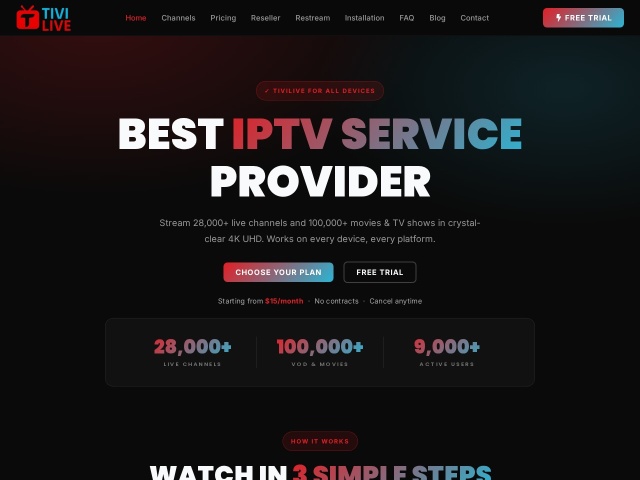
For example, Krooz TV displays a price label of $15/month alongside a 24-hour trial label. According to the provider's own listing, its package includes 30,000+ live television channels and 40,000+ on-demand media titles, delivered across standard M3U and MAG protocols. In comparison, Tivi Live presents a price label of $15/month with a 24-hour trial label, paired with the provider's own listing of 28,000+ live stations and 100,000+ on-demand videos. Comparing these provider-reported inventories against documented format support allows viewers to evaluate whether a platform matches their hardware and viewing preferences.
Standard Playback Formats Versus Sideloading Risks
Many promotional reviews instruct users to manipulate system preferences, activate unknown download sources, and install unvetted third-party utility applications. Bypassing native operating system safeguards poses avoidable software security risks. Reliable media playback does not require risky installation workarounds. Instead, compliant media applications utilize established protocol formats such as M3U playlists, MAG middleware portals, or native browser interfaces.
Within the directory, services feature distinct operational formats. Double Click TV maintains a price label of $15/month with support designated for M3U, MAG, Enigma, and dedicated web player environments, though its trial label is not recorded. StreamLive operates through a web player interface, featuring a price label of Premium on site, a browser trial label, and the provider's own listing of 500+ / 10,000+ live channels. Viewers seeking detailed protocol compatibility can review the comprehensive comparison section.
Identifying Template Checkout Architectures
A notable portion of third-party streaming storefronts deploy cloned ecommerce layouts. When multiple services share identical backend software, published subscription costs can fluctuate rapidly or disappear entirely behind generic order forms.
The directory accounts for these storefront designs transparently. For brands such as Ottocean, Bunnystream, and Worthystream, the directory assigns a price label of Template listing with device compatibility for M3U and MAG setups. In this directory, a price label of Template listing means a shared checkout layout was seen and no price was copied. Users are never subjected to invented pricing estimates. Readers seeking additional clarity regarding commercial partnerships and referral tracking can review the affiliate disclosure.
Protecting Connection Privacy on Shared Networks
Streaming media across residential or shared networks introduces practical digital privacy considerations. Using public internet connections in apartments, dormitories, or hospitality venues can expose local browsing habits to adjacent network hardware.
Surfshark serves as a practical shared-Wi-Fi privacy tool by encrypting internet traffic across public and shared wireless networks. It is important to note that a VPN does not unlock channels or modify content availability. For current subscription price and trial details regarding Surfshark, see the official site. Viewers interested in network encryption tools can consult the dedicated Surfshark section.